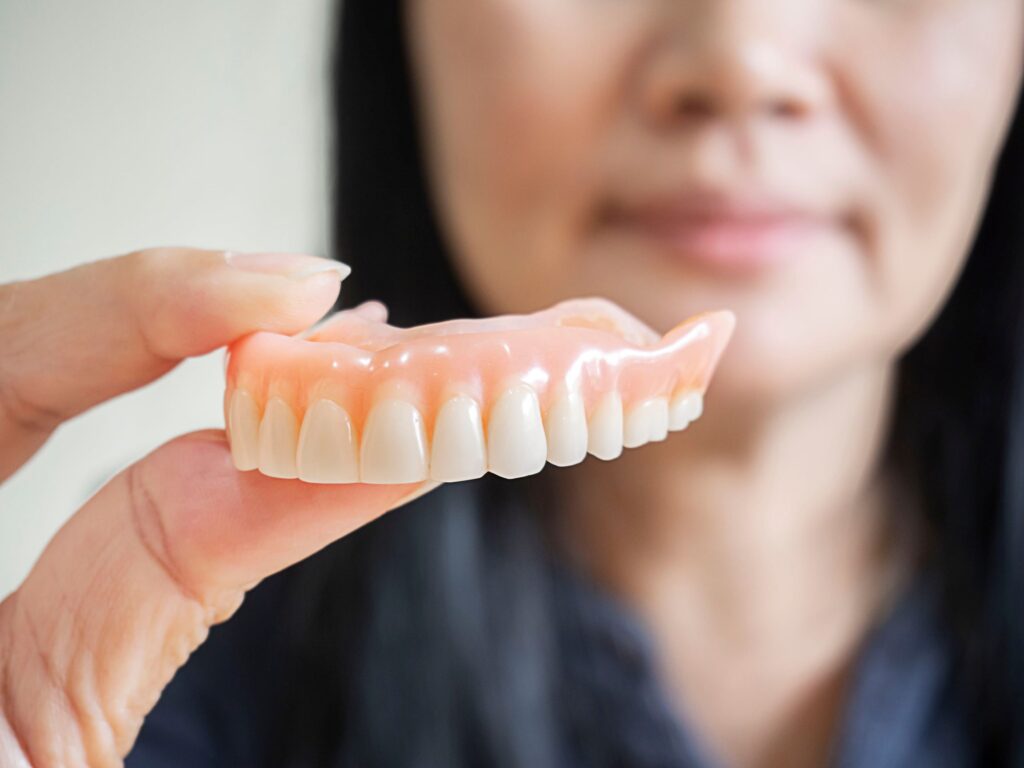
Dentures are the standard solution for tooth loss because they can simultaneously improve your smile’s functionality while enhancing your appearance. Your new teeth are customized to look and feel as lifelike as possible, and can last for years if cared for correctly.
But your jawbone starts to thin after teeth are lost, which can eventually make your restoration ill-fitting. You might feel tempted to reline them yourself, but this isn’t usually recommended. Continue reading to learn more about why!
What is Denture Relining?
Dentures are made from two main components: the base and the pontics, or artificial teeth. The former is usually made from gum-colored acrylic that’s designed to resemble your natural connective tissues and is intended to fit like a glove.
However, without as many roots in place to stimulate your jawbone each time you bite down, the foundation of your mouth starts to degenerate. This can lead to ill-fitting restorations, which can contribute to other oral issues, such as developing a bite misalignment or sores on your gums. They’re also more likely to become destabilized or dislodged and sustain injuries.
Relining your dentures involves adding additional material to and reshaping the base to improve their fit and comfort.
What are the Types of Denture Relining?
There are two main methods of relining dentures, and the best option for you can depend significantly on your unique circumstances. For instance, a hard relining involves adding a more rigid, durable acrylic to the base of your teeth to provide maximum contact with your connective tissues. Although firm and resilient, this material can also create pressure points and so isn’t always recommended for patients with increased sensitivity.
Those with tender tissues might benefit from a soft relining, in which a pliable polymer is added to the foundation of your prosthetics to act as a cushion. Although it causes less discomfort, this option also doesn’t usually last as long and might need to be reapplied every year or two.
Can I Reline My Own Dentures?
Some stores sell kits with materials to reline your own dentures, but unfortunately, many patients inadvertently make matters worse trying to use these commercial products. For example, you might not know where to put the additional material, and might bulk up areas that throw off your bite alignment. Errors in application might also lead to associated aches or challenges eating and speaking normally.
As a result, it’s usually recommended that you contact your dentist to adjust your dentures. Your provide can also let you know when they’re nearing the end of their lifespan and require replacement.
About the Practice
Patients at Plush Dentistry benefit from two dentists passionate about helping families in Frisco build and maintain beautiful, healthy smiles. Dr. Ali and Dr. Kraipak collaborate to offer a comprehensive menu of services, including dentures and restorative repairs, conveniently under one roof. Their caring approach is combined with advanced technology for more comfortable, accurate treatments results. You can request an appointment on the website or by calling (469) 256-7098.