Children’s Dentistry – Frisco, TX
Setting the Stage for a Lifelong Smile
For our youngest patients, we focus on creating a relaxed, friendly environment where they feel comfortable. A great dentist-patient relationship starts with the earliest visits—usually once the first teeth start to come in. The first few visits are all about getting your child familiar with our dental office, our staff, and our doctors. Though little is needed at this stage of development, these visits set the tone for more thorough exams in the future. Regular visits for children's dentistry in Frisco, TX also establish the beginnings of a lifetime of great oral hygiene. As children grow, they will begin to receive the same preventive exams and cleanings as their parents. We stress the importance of brushing teeth twice per day, drinking water instead of sugary juices and sodas, and eating a balanced diet.
Why Choose Plush Dentistry for Children’s Dentistry?
- Private Treatment Suites for Your Child’s Comfort
- Same or Next-Day Emergency Care
- Modern Dental Technology and Spa-Like Amenities
Dental Sealants
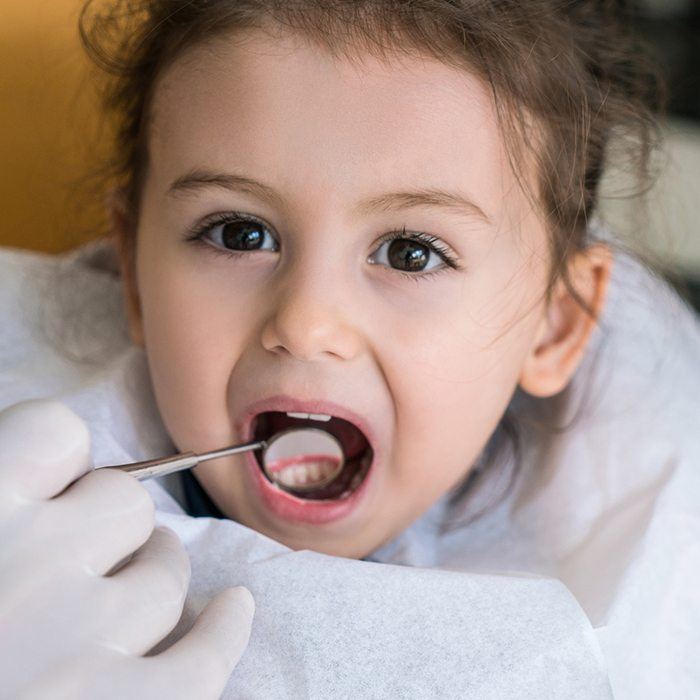
Beyond consistent preventive care, dental sealants are the next best way to stop tooth decay. The sealants create a physical barrier between the tooth and the outside world, which is full of bacteria and acids that can cause damage. If we recommend dental sealants for your child, we will check with your insurance company to see if they are covered—in many cases, they are! Your child’s first set of teeth serves several important purposes. We want to make sure they do not come out until the adult teeth are ready to take their place.
Fillings and Dental Crowns
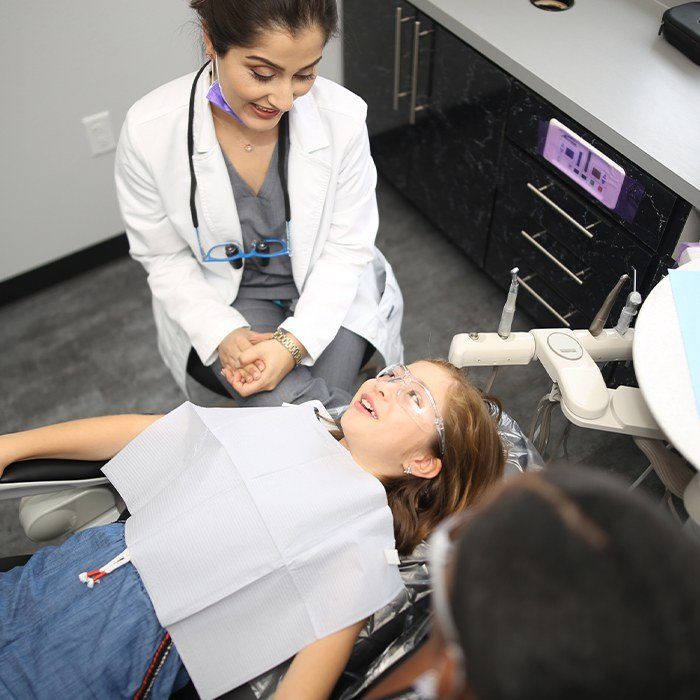
Sometimes, despite our best efforts at home, children develop cavities and decay that must be addressed. Fortunately, because of the less complex structure of baby teeth, fillings at this stage are relatively simple. In many cases, treatment can be completed comfortably with the use of local anesthetic when appropriate.
In more extensive cases of tooth decay, we may instead place a crown on a baby tooth. Though these teeth will ultimately fall out on their own, baby teeth are extremely important before your child loses them. Without the teeth in place, basic chewing is impaired, developing speech patterns can be interrupted, and even normal jaw formation can be negatively impacted.
Pulpotomies

A pulpotomy is a pediatric version of a root canal. Just as with crowns, pulpotomies are sometimes necessary to preserve a baby tooth until your child’s permanent tooth is ready to come in. In cases where decay has negatively impacted the root structure, a pulpotomy may be the best option.
Common Childhood Dental Emergencies

As parents, we know kids are great at getting hurt. It can be difficult to know what counts as an emergency and what can wait to be addressed. The most common pediatric dental emergencies we see include:
Knocked-Out Teeth
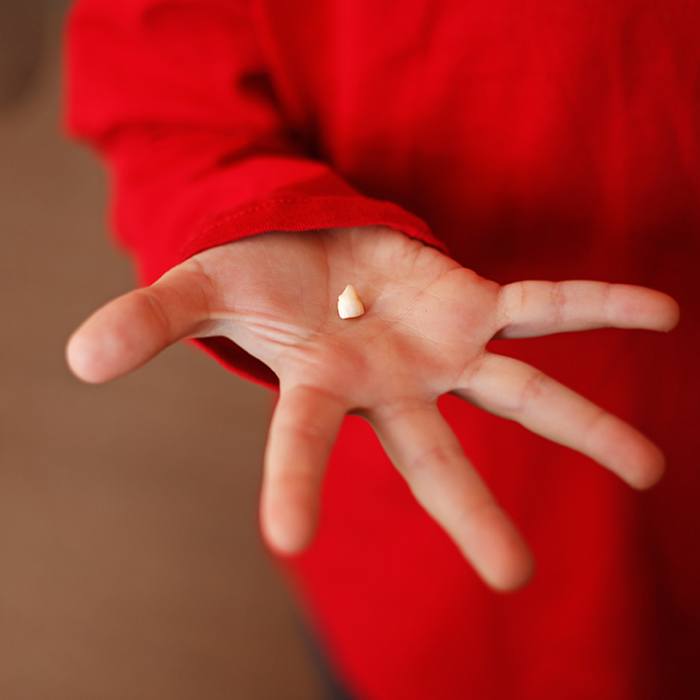
Call our dental office right away if your child has a tooth knocked out. If possible, place the tooth in milk and bring it with you. If we can act quickly enough, we can put it back in place. While a pulpotomy will probably be required, the tooth will reattach to the bone if it is replaced in time.
Broken Tooth

Between playground accidents, roughhousing with siblings, and other common incidents, broken teeth are common. Call our dental office right away, and if you see any cuts or abrasions, rinse them with clean water.
Complaints of Tooth Pain

If your child is complaining of tooth pain, but you do not see any obvious cause, call us to schedule an exam. Tooth pain in kids can be as simple as an adult tooth applying pressure on a baby tooth, or it can be a sign of a cavity or abscess.
Children's Dentistry FAQs
When Should I Take My Child for Their First Appointment?
The American Academy of Pediatric Dentistry recommends scheduling your child's first dental visit once their first tooth erupts, or by their first birthday at the latest. Many parents are surprised by how early the first visit needs to happen, especially when their child has few (if any) teeth to treat.
However, these early visits aren't really about cavities or cleanings. We want your child to get comfortable with going to our Frisco office and seeing our team. Positive experiences build trust and familiarity, so it's easier to see us when they're old enough. Plus, it allows our team to check their oral development and offer guidance to you, the parents.
Are Baby Teeth Really That Important?
Absolutely! Even though baby teeth are temporary, they're incredibly important to your child's oral development. They help with essential functions like chewing food properly, developing clear speech patterns, and guiding normal jaw growth. Baby teeth also act as placeholders, saving space for permanent teeth to come in properly.
If a baby tooth is lost too early, it can lead to crowding or alignment issues down the road. That's why we tell all our parents that preventive dentistry in Frisco is just as important for baby teeth as it is for adult ones.
What Are the Benefits of Fluoridated Water?
Fluoride is a naturally occurring mineral that's in all kinds of things, from soil to certain foods. It strengthens tooth enamel and helps prevent cavities by making teeth more resistant to the acids produced by bacteria.
Drinking fluoridated water gives your child's teeth consistent, low-level protection between brushing and dental visits. It's an easy way to support your child's oral health with zero extra effort! Combined with fluoride toothpaste and regular children's dentistry visits at our Frisco office, your child can keep their smile strong and healthy now and in the future.
Are Thumb Sucking and Pacifier Habits Harmful for a Child's Teeth?
As with most things, moderation is key. Thumb sucking and pacifier use are completely normal for infants and toddlers, and most children naturally stop on their own by ages 2 to 4.
However, if these habits continue beyond that point, they can begin to affect the alignment of your child's teeth and the shape of their jaw or roof of their mouth. Over time, these changes can lead to an open bite or other alignment issues.
If your child hasn't outgrown thumb sucking or pacifier use by preschool age, our Frisco team can help you explore gentle strategies for breaking the habit before it affects their smile. If you have concerns, reach out to our team anytime.