Many people largely consider their teeth when they think about their dental health, but without healthy connective tissues, there would be nothing to hold them in place. You might think your gums are perfectly healthy if you haven’t noticed any issues, but that’s not always the case.
Gingivitis, the earliest stage of gum disease, is easy to miss so it often progresses. Then, once your condition worsens, you’ll require treatment, as a soft tissue laser procedure, to address it. Continue reading to learn more about this advanced technology and 3 reasons why it’s often the ideal way to removing damaged oral tissues!
Reason #1: More Comfortable Treatments
Traditional methods of removing damaged gum tissue involves making incisions with a scalpel, which often requires sutures. Not only can this hurt, but it can also leave wounds that are prone to developing infections.
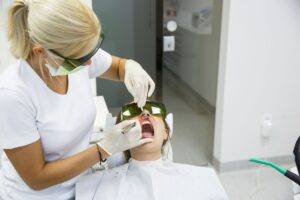
Meanwhile, state-of-the-art equipment, such as an NV PRO3 Microlaser, uses a concentrated beam of light instead of traditional scalpels to carefully remove damaged gums. This cauterizes the wound almost instantly and vaporizes bacteria, reducing the risk of associated infection or bleeding. This can lead to more comfortable and accurate results that are less likely to cause irritation afterwards.
Reason #2: Fewer Dietary Restrictions
The traditional method of removing damaged connective tissues also sometimes requires that patients stick to certain dietary restrictions to avoid harming their suture or triggering additional aches or inflammation.
For example, you might be asked to stick to softer foods for a week or two while your mouth mends. But because laser dentistry seals the remaining tissues in your mouth, you might only feel a need to change your diet for a day or two, and some lucky patients even feel healthy enough to eat normally the same day as their appointment.
Reason #3: Reduced Recovery Times
One of the main benefits of treating gum disease with a soft tissue laser is that it takes less time for your mouth to fully recover after your procedure. Traditional incisions and stitches can take 1 to 2 weeks for initial healing, while full tissue reattachment might take closer to 2 to 6 weeks.
Meanwhile, the initial downtime after a laser service is about 24 to 48 hours, then additional healing occurs over the next few weeks.
If you’ve developed sensitivity or noticed your gums seem puffier or darker than usual, you might already have a problem requiring your dentist’s attention. Contact them for an appointment and they can provide a customized treatment plan, such as a laser procedure, to help improve your oral health!
About the Practice
Patients of all ages are welcomed at Plush Dentistry and benefit from a husband-and-wife team who are passionate about helping them build and maintain happy, healthy smiles. Dr. K and husband, Dr. Ali, have decades of combined experience and today, they collaborate to offer a complete menu of services, including gum disease treatment, using state-of-the-art technology. If you’re concerned about gum disease, you can request an appointment on the website or by calling the office at (469) 256-7098.